It was a busy and insightful few days for the Real Wireless team at the Small Cells World Summit (SCWS) in London, contributing to the discussions on the technologies, spectrum strategies, and deployment models shaping the future of wireless connectivity.
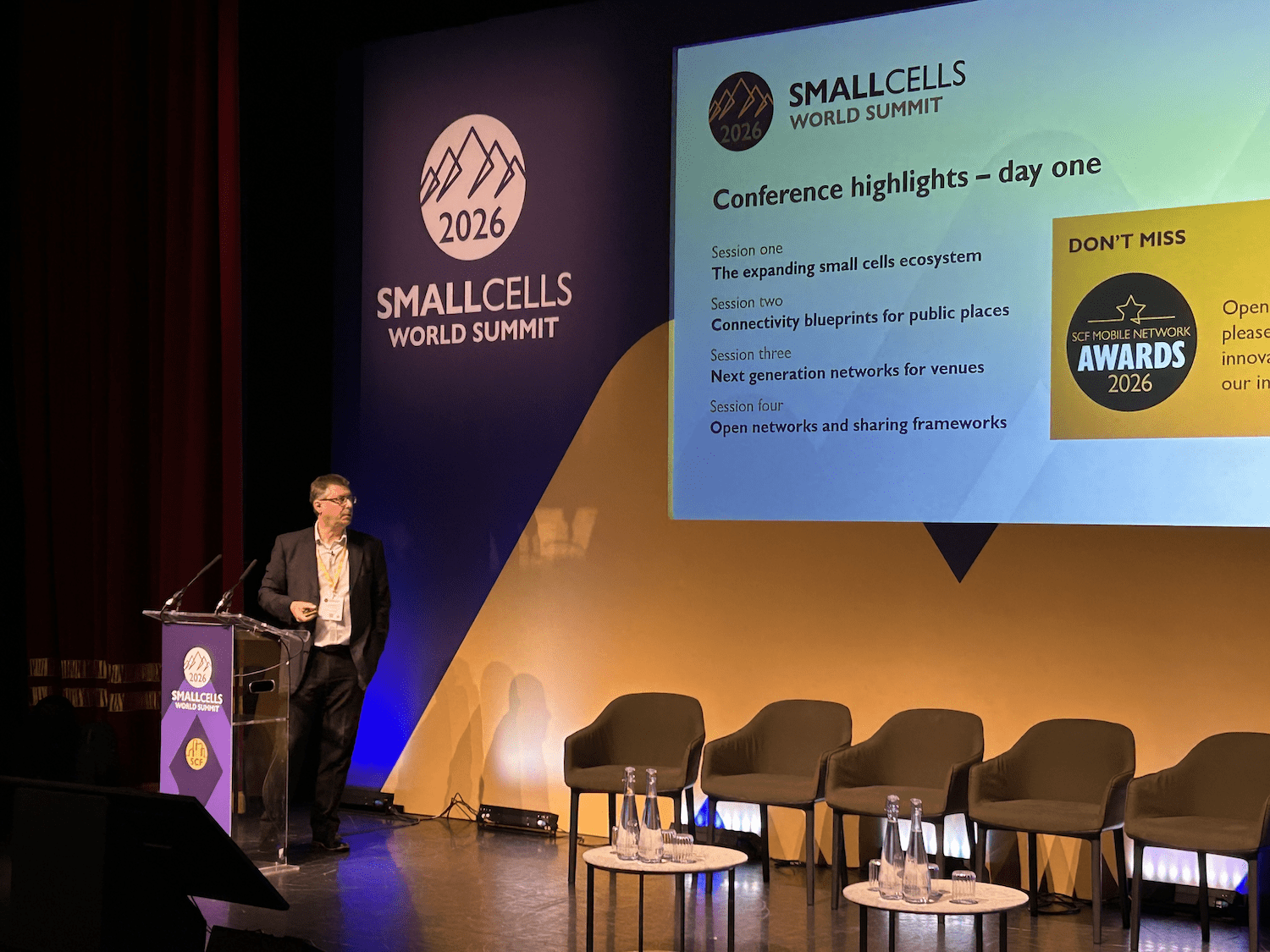
Our CEO, Simon Fletcher, who also serves as CSO of the Small Cell Forum, presented a number of sessions over the two-day event, focusing on the evolution of small cell architectures, neutral host models, and the role of network densification in supporting next-generation connectivity requirements across public and private networks. His sessions highlighted the increasing importance of scalable, cost-efficient infrastructure, alongside the growing role of enterprise stakeholders not only as network users but also as active participants in deployment and financing models, with a clear increase in willingness to invest in dedicated and hybrid connectivity solutions where performance and control requirements justify it.
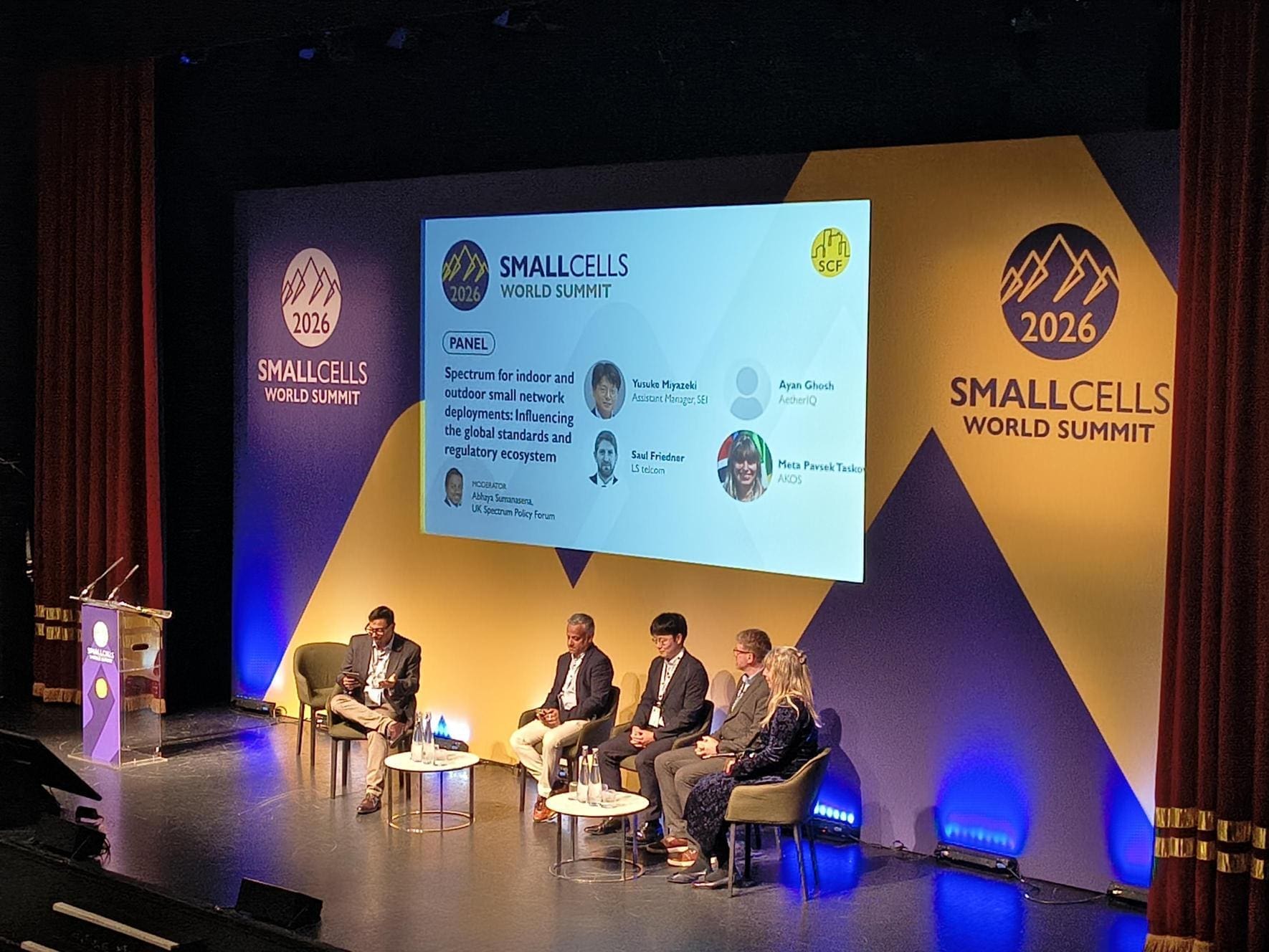
Our Head of Policy and Regulation, Dr. Abhaya Sumanasena, Chair of UKSPF Spectrum, moderated a panel on “Indoor and Outdoor Small Network Deployments: Influencing the Global Standards and Regulatory Ecosystem.” The discussion examined how evolving regulatory frameworks, spectrum access models, and standards development are enabling more flexible deployment approaches for enterprise and public-sector networks.
A key theme was the increasing adoption of hybrid indoor connectivity architectures, where lower-frequency spectrum bands provide broad-area coverage and mobility support, while higher-frequency spectrum delivers the capacity and throughput required in high-density environments such as campuses, transport hubs, industrial facilities, and commercial buildings. The panel also explored the implications for spectrum policy, interoperability, standards alignment, and long-term network planning.
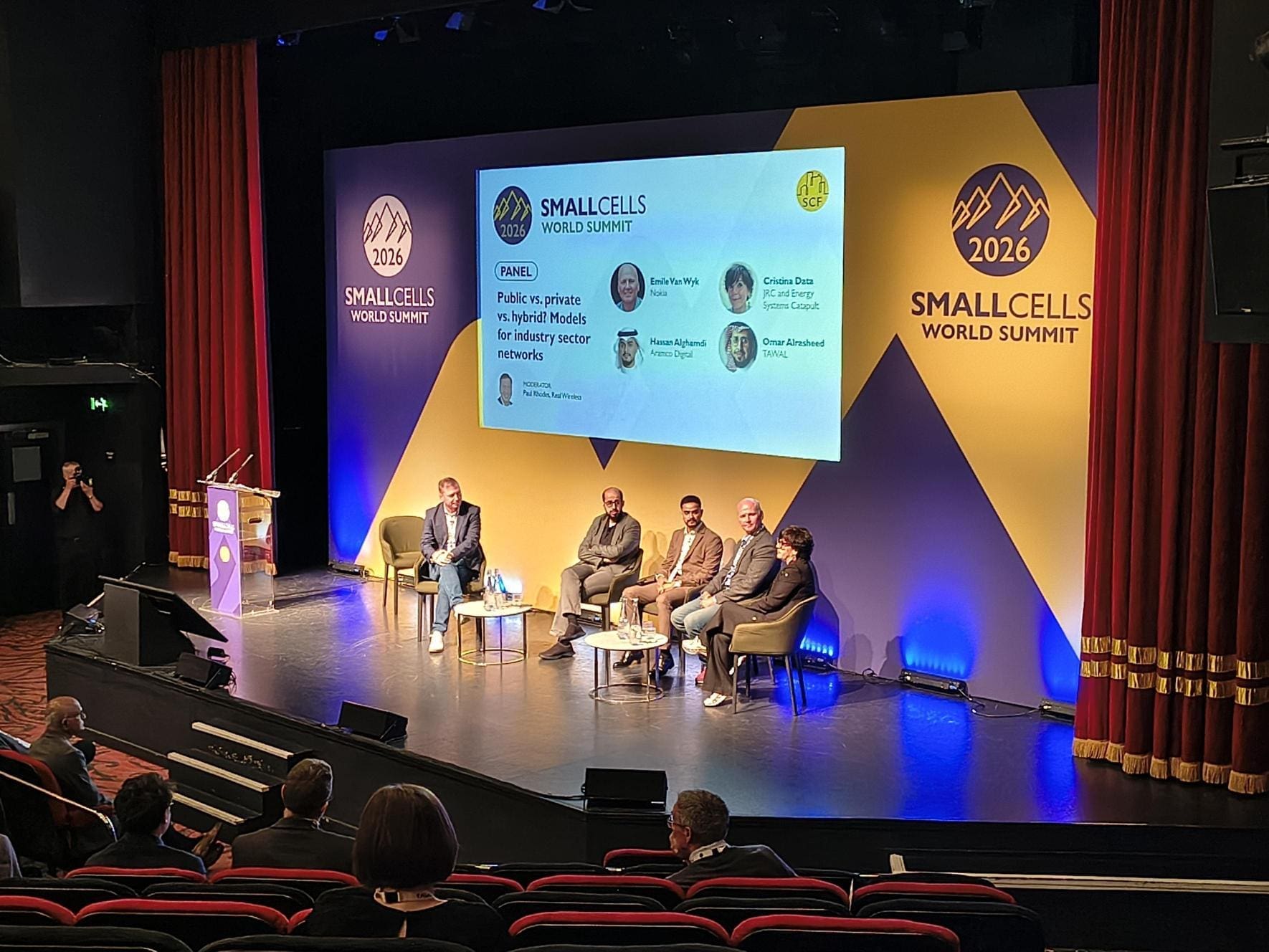
Paul Rhodes, our Wireless Networks and EdgeDC expert, moderated a panel discussion on “Public vs. Private vs. Hybrid? Models for Industry Sector Networks.” The session explored the technical and operational trade-offs between deployment models, including spectrum availability, network ownership, security requirements, service-level objectives, resilience, and total cost of ownership. Panellists discussed how organisations are increasingly adopting hybrid architectures to combine the coverage advantages of public mobile networks with the control, reliability, and application-specific performance offered by private wireless infrastructure, with enterprise demand and funding models becoming an increasingly influential factor in shaping deployment strategies.
Beyond the formal sessions, Real Wireless also supported the framing and chairing of a collaborative workshop between the Small Cell Forum and the UK JOTS Forum. The workshop explored emerging neutral host architectures and their evolution as 5G matures into 5G Standalone (5G-SA), including how shared infrastructure models can better support multi-operator, enterprise, and venue-based deployments.
Across the event, discussions highlighted the growing convergence of public and private wireless ecosystems, the importance of spectrum innovation, and the role of small cells, edge computing, Open RAN, and neutral host solutions in supporting increasingly diverse connectivity requirements. The increasing role of enterprises as both consumers and co-investors in network infrastructure was a recurring theme, reinforcing the shift toward more demand-driven, commercially flexible deployment models.
SCWS provided an excellent platform to exchange ideas, share practical deployment experience, and explore the policy, technical, and commercial challenges that will define the next phase of wireless network evolution. We were delighted to contribute to these conversations and look forward to continuing discussions throughout the rest of the year.